
Pressure washing uses targeted water pressure combined with surface-specific cleaning chemistries to restore and protect exterior surfaces, and in Sarasota’s humid, coastal climate the right method prevents algae growth and surface deterioration. This article explains how soft washing and high-pressure methods differ, when each is appropriate for roofs, siding, concrete, and pavers, and how proper technique extends surface life while protecting landscaping and local waterways. Readers will learn safe biocide application for algae and mold, step-by-step processes for residential and commercial jobs, and paver restoration best practices including efflorescence removal, sanding, and sealing. We also cover eco-friendly containment and recycling approaches required in coastal environments and provide a practical maintenance schedule tailored to Florida conditions. Each section includes concise tables, action lists, and technician-level guidance so homeowners and property managers can evaluate methods, avoid common mistakes, and plan maintenance that preserves curb appeal and property value.
What Are the Best Pressure Washing Techniques for Different Exterior Surfaces?
Pressure washing techniques differ by surface hardness, porosity, and risk of damage; choosing soft washing or high-pressure washing depends on material tolerance, biological loading, and environmental sensitivity. Soft washing uses low-pressure application of detergents and biocides to remove algae, moss, and organic stains without mechanical wear, making it ideal for delicate roofs, painted surfaces, and some siding. High-pressure washing (with appropriate PSI, nozzle selection, and distance) is reserved for durable surfaces like poured concrete, some pavers, and commercial-grade masonry where mechanical removal of grime and stains is necessary. The result of matching technique to surface is effective cleaning with minimal etching, paint stripping, or joint sand loss. Below is a quick-reference table to compare surfaces, recommended methods, typical PSI ranges, common chemistries, and relative risk so you can pick the right approach for each area of a property.
The table below summarizes surface-specific recommendations so readers can scan method, pressure guidance, and risk at a glance.
|
Surface
|
Recommended Method
|
Typical PSI / Nozzle
|
Common Chemistry
|
Risk Level
|
|---|---|---|---|---|
|
Asphalt shingle roof
|
Soft wash (low pressure)
|
< 500 PSI; wide-angle nozzle
|
Algaecide / biodegradable detergent
|
Low (avoid abrasion)
|
|
Vinyl or painted siding
|
Soft wash or low-pressure rinse
|
500–900 PSI max; fan nozzle
|
Mild detergent + surfactant
|
Moderate (pressure can strip paint)
|
|
Concrete driveway
|
High-pressure cleaning
|
2,000–3,000 PSI; turbo/25° nozzle
|
Alkaline degreaser for oil stains
|
Moderate-High (etching risk)
|
|
Interlocking pavers
|
Low-to-moderate pressure + chemical cleaner
|
800–1,500 PSI; fan/nozzle at angle
|
pH-neutral cleaner; efflorescence remover
|
Moderate (sand loss)
|
This comparison clarifies why technique selection is more important than brute force: soft washing protects fragile materials while targeted high pressure restores hard surfaces. Understanding these differences leads naturally into how soft washing specifically protects roof systems in Sarasota.
How Does Soft Washing Protect Delicate Roofs in Sarasota?
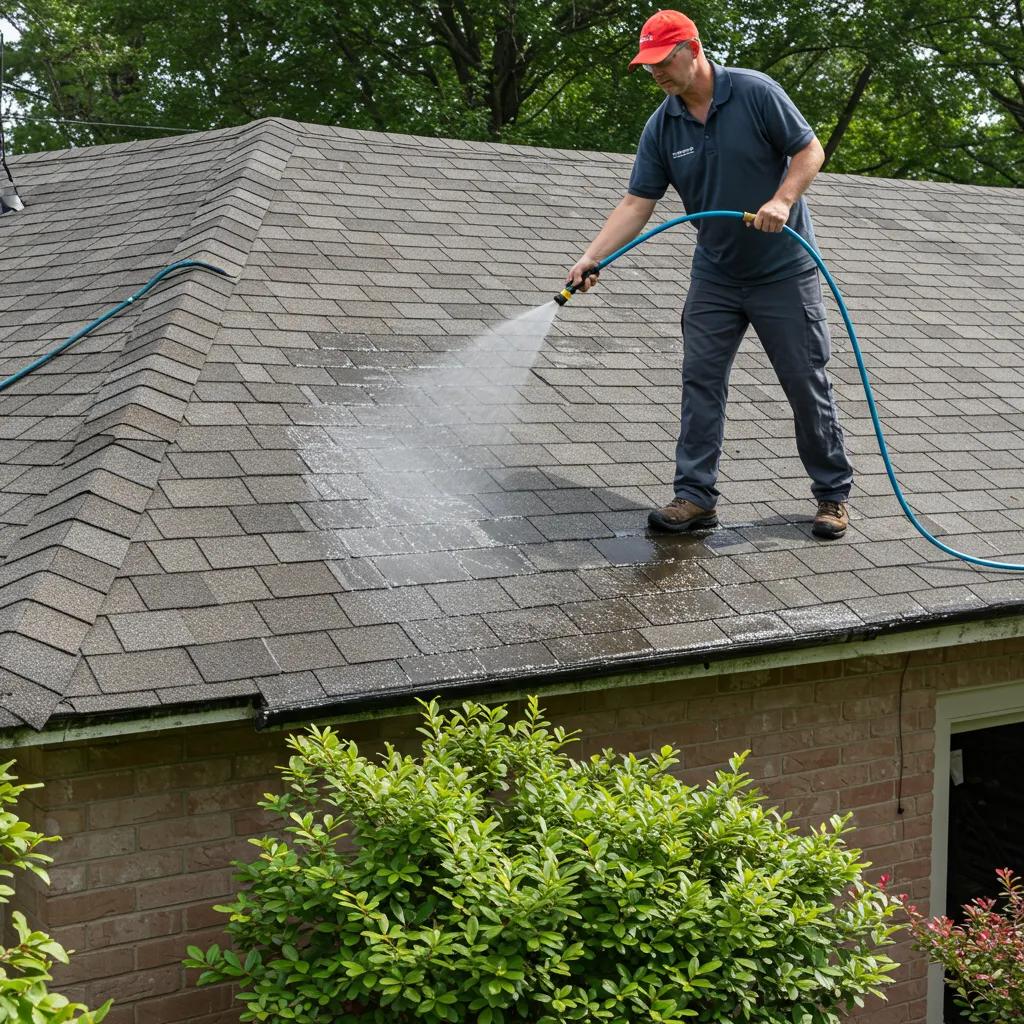
Soft washing protects shingles and tile by combining low water pressure with targeted detergents and biocides that break down organic growth rather than scraping it off, preserving the granule matrix on asphalt shingles and the glaze on clay or concrete tiles. The low-pressure approach typically employs a controlled chemical dwell time that kills algae spores and oxidizes organic binders, after which a gentle rinse removes residues without lifting granules or loosening flashings. In Sarasota’s warm, humid environment, soft washing reduces recurrence of black streaks caused by algae and prevents premature shingle degradation that follows abrasive cleaning. Technicians should perform a test patch, check roof integrity, and protect gutters and landscaping before application, since proper preparation and containment determine both safety and lasting results.
When Should You Use High-Pressure Washing on Concrete and Driveways?

High-pressure washing is appropriate for concrete driveways and sidewalks when removing ingrained dirt, tire marks, mold, or chewing gum that detergents alone cannot lift; the mechanical action helps dislodge deep-set soils. For concrete, typical safe operating ranges are 2,000–3,000 PSI with a 25–40° nozzle or a surface cleaner for even coverage; hot-water units improve grease and oil removal on industrial sites. Pre-treating oil stains with an alkaline degreaser and using a controlled pass pattern avoids etching and surface roughness, and keeping the wand at an appropriate angle reduces joint scour. When adjacent surfaces are softer—such as vinyl trim, pavers, or plantings—use shielding and lower pressure to prevent collateral damage, since high-pressure mistakes often cause the need for costly repairs.
After discussing surface-specific techniques, consider how remediation of biological growth works in practice and which safety steps are essential for algae and mold removal.
How Do You Effectively Remove Mold, Algae, and Mildew from Exterior Surfaces?
Effective remediation of mold, algae, and mildew begins with identifying the organism and surface—then applying a chemistry and mechanical approach tuned to that pairing so the biocide can penetrate and prevent regrowth. Soft washing with EPA-compliant biocides and surfactants breaks cell walls and lifts organic matter while minimizing mechanical abrasion; a correct dwell time allows the chemistry to act before a controlled low-pressure rinse removes residues. Protecting plants, pets, and storm drains with containment measures and rinsate management is essential in coastal Florida where runoff can affect waterways. The following list outlines a concise stepwise remediation workflow that balances efficacy and environmental protection.
-
Inspect and test: Identify surface type and run a small test patch to confirm efficacy and material tolerance.
-
Apply appropriate chemistry: Use a biocide and surfactant with the correct dilution and dwell time for the organism and surface.
- Contain and rinse: Implement runoff containment, rinse with low pressure, and perform post-treatment inspection to ensure removal and prevent drift.
These steps establish a defensible process for biological remediation; the next section explains safe methods specifically for roofs and siding and when to involve professionals.
What Are the Safe Methods for Algae and Mold Removal on Roofs and Siding?
Safe algae and mold removal on roofs and siding relies on a sequence: spot testing, controlled application of a soft-wash solution, specified dwell time for the biocide to work, and a low-pressure rinse that removes dead material without mechanical damage. For asphalt shingles and painted siding, technicians use surfactant-enhanced algaecides that break biofilms while minimizing detergent concentration to protect landscaping and finishes. Containment measures—like blocking gutters, using mats, and capturing wash water—reduce runoff and protect local storm systems, while post-cleaning inspection ensures sealants and flashings were not disturbed. Homeowners should escalate to professionals when roofs are steep, heavily soiled, or when containment and environmental compliance are required.
How to Prevent Damage While Cleaning Driveways and Pavers?
Preventing damage to driveways and pavers requires pre-clean prep, careful pressure selection, and post-cleaning restoration of joint sand and sealer application when appropriate. Sweep and pre-treat oil or grease spots with an appropriate degreaser, then use a surface cleaner or controlled fan nozzle at 800–1,500 PSI for pavers to avoid dislodging joint sand. Keep the wand angle shallow and maintain distance from the surface to minimize spalling; after cleaning, replace polymeric or fine joint sand lost during cleaning and consider sealing to lock joints and reduce future contamination. These precautions reduce the need for costly repointing while improving visual uniformity and long-term performance.
What Are the Step-by-Step Processes for Pressure Washing Residential and Commercial Properties?
A reliable pressure washing job follows a consistent process of assessment, preparation, correct cleaning method application, rinsing, and inspection; this sequence reduces risk and ensures predictable results for both residential and commercial projects. The assessment step catalogs surfaces, access constraints, and environmental controls; preparation includes masking, moving outdoor furniture, and protecting plants. Execution uses technique selection—soft wash for roofs and siding, high-pressure for concrete—combined with correct nozzles, PSI, and trained operator control. Post-clean inspection verifies adhesion, surface integrity, and client satisfaction and documents any follow-up recommendations for sealing or repairs. Below is a numbered, featured-snippet-style process that summarizes these steps for easy reference.
-
Assessment: Survey surfaces, note sensitive areas, and plan containment for run-off.
-
Preparation: Mask fixtures, protect landscaping, and pre-treat stains or efflorescence.
-
Cleaning: Apply soft-wash chemistries or high-pressure cleaning per surface guidelines.
-
Rinsing and reclamation: Rinse systematically and collect or contain wash water for filtration.
-
Inspection and follow-up: Check results, document issues, and advise on sealing or maintenance.
These steps form the backbone of safe, effective jobs; the soft washing workflow below drills into roof and house exterior specifics.
(Compact service integration) Gorilla Kleen applies a consistent process across jobs: assessment, surface-appropriate cleaning (soft wash or high-pressure as needed), and a final inspection to confirm results. Their technicians are fully trained, licensed, and insured, and the company emphasizes safe soft-wash methods for roofs to minimize damage. For property owners seeking a no-obligation evaluation, a free quote can be arranged by contacting the team directly by phone; this helps match the right technique to your surface conditions before work begins.
What Is the Soft Washing Process for Roofs and House Exteriors?
The soft wash workflow starts with a test patch and structural check, followed by protecting non-target areas and applying a low-pressure, surfactant-enhanced biocide mixture to affected zones. Application is done from low to high sections so dwell time and runoff are controlled, enabling the chemistry to break down growth without mechanical abrasion. After the prescribed dwell time, technicians perform a low-pressure rinse and inspect flashings, gutters, and set-backs for any remaining staining or loosened materials. Proper containment and post-job documentation complete the service so homeowners know what was treated and when follow-up may be necessary.
How Is Commercial Pressure Washing Different from Residential Cleaning?
Commercial jobs typically require larger equipment, higher-capacity water recovery, and stricter permitting or scheduling to avoid business disruption, so planning and logistics become more complex than a residential wash. Commercial surfaces such as loading docks, parking garages, and warehouses demand hot-water units or stronger detergents and often need off-hour scheduling and traffic control. Water containment and recycling systems scale up for commercial sites, and crews use industrial-grade filtration and vac systems to meet environmental and regulatory expectations. The operational differences drive the need for experienced crews, robust safety plans, and client coordination to keep turnaround times predictable.
How Does Paver Cleaning and Sealing Enhance Surface Longevity and Appearance?
Paver restoration restores aesthetics and extends performance by removing surface salts and stains, stabilizing joint sand, and applying sealers that reduce moisture intrusion and inhibit mold growth; together these steps slow deterioration and reduce long-term maintenance costs. Efflorescence, staining, and sand loss are common issues—removal and stabilization require chemistry, mechanical brushing or low-pressure washing, and careful re-sanding to re-lock pavers. Sealing options range from penetrating sealers that protect against moisture to film-forming sealers that enhance color and resist oil; the right product depends on traffic load and climate exposure. The table below compares paver issues, remediation techniques, estimated time investment, and the typical longevity improvement owners can expect.
This table helps property managers decide when professional paver restoration offers the best return on maintenance time and cost.
|
Paver Issue
|
Remediation Technique
|
Typical Time
|
Expected Longevity Improvement
|
|---|---|---|---|
|
Efflorescence (salt bloom)
|
Chemical neutralizer + brushing and rinse
|
1–3 hours (small area)
|
Reduces recurring surface salts for 1–2 years
|
|
Sand loss / joint destabilization
|
Sand replacement and compaction
|
2–6 hours depending on area
|
Restores interlock for 2–5 years
|
|
Oil / grease staining
|
Hot-water or alkaline cleaner + agitation
|
1–4 hours per stained area
|
Visual restoration and reduced re-staining
|
What Are the Techniques for Efflorescence Removal and Sanding on Pavers?
Efflorescence removal begins with mechanical brushing to remove loose crystals followed by a controlled chemical treatment that dissolves salts without harming the paver surface; low-pressure rinsing then flushes residues. Sanding involves sweeping fine, kiln-dried sand into joints and compacting the area with a plate compactor to re-establish interlock; polymeric sand can be used where appropriate to reduce washout. Professionals avoid over-abrading pavers and balance chemical strength with surface porosity, and they recommend spot-testing before large-area application. When efflorescence is persistent or pavers show structural instability, professional assessment is advised to select remedial chemistry and compaction methods.
How Does Sealing Protect Sarasota’s Pavers from Weather and Mold?
Sealers create a barrier that reduces water penetration, inhibits staining, and slows mold growth—benefits that are particularly valuable in Sarasota’s salt-influenced, humid climate where moisture and organic debris accelerate biological growth. Penetrating sealers preserve the natural texture and allow vapor transfer, while film-forming sealers enhance color and add surface sheen; selection depends on slip-resistance needs and UV exposure. Application typically follows thorough cleaning and full joint stabilization; sealer lifespan varies by product and traffic but commonly ranges from two to five years. Proper sealing reduces cleaning frequency and helps maintain color and structural integrity over time.
Why Choose Eco-Friendly Pressure Washing Solutions in Sarasota, Florida?
Eco-friendly pressure washing prioritizes biodegradable cleaners, wash-water containment, and recycling systems to protect landscaping, local storm drains, and coastal ecosystems while still delivering effective surface restoration. Using EPA-compliant detergents and capturing rinse water for filtration prevents harmful runoff into municipal drains and sensitive estuaries, and containment matting or vac systems reduce plant exposure to concentrated chemicals. Environmentally-minded methods also reduce neighbor complaints and align with local regulations that restrict uncontrolled discharge, making them especially relevant for Sarasota properties adjacent to waterways. The benefits of eco-friendly approaches are practical and regulatory; the list below highlights the primary homeowner and environmental advantages.
-
Safer landscaping: Biodegradable cleaners minimize plant and soil damage when containment is used.
-
Regulatory compliance: Containment and recycling reduce the risk of violating local runoff regulations.
-
Long-term cost savings: Proper containment and targeted chemistry reduce retreatment frequency and potential fines.
Gorilla Kleen emphasizes eco-friendly methods throughout its operations, using containment and recycling of wash water and biodegradable cleaning agents to protect properties and nearby waterways. The company’s teams are trained, licensed, and insured, and services are backed by a satisfaction guarantee to ensure both environmental protection and cleaning effectiveness for Sarasota clients.
What Are the Benefits of Using Environmentally Safe Cleaning Agents?
Environmentally safe cleaning agents minimize plant and aquatic toxicity while remaining effective when paired with correct dwell times and agitation; they break down organic materials without leaving persistent hazardous residues. These chemistries also reduce the potential for corrosion on metal fixtures and help maintain soil health, which is important for landscaped properties common in Sarasota. Using safe agents combined with containment reduces liability and supports community stewardship of local waterways. Homeowners who prioritize sustainability should require technicians to document product types and containment procedures before work begins.
How Does Water Containment and Recycling Work in Pressure Washing?
Water containment and recycling combine physical barriers, collection systems, and filtration to capture and treat wash water on-site, allowing solids to be removed and water to be reused or disposed of safely. Residential projects commonly use containment mats, blocked drains, and portable filtration units, while commercial jobs may deploy vac trucks and multi-stage filtration including oil/water separation. Recycled water can be reused for rinsing where regulations permit, reducing freshwater demand and minimizing environmental discharge. Effective containment supports eco-friendly claims by ensuring cleaning residue does not migrate into storm systems or sensitive coastal waters.
How Often Should You Schedule Pressure Washing for Different Surfaces in Florida’s Climate?
Scheduling maintenance in Florida requires balancing frequent biological growth with surface durability; humidity, shade, and proximity to salt air accelerate soiling and determine practical cleaning intervals. Baseline recommendations are tailored to surface type: roofs typically every 12–24 months in humid, shaded areas; driveways and sidewalks every 12–18 months depending on traffic and oil staining; siding and screened enclosures every 12–24 months, and pavers annually or as needed before sealing. These intervals should adjust for shaded north-facing facades, nearby tree cover, and coastal salt exposure, which all increase cleaning frequency. The table below maps recommended intervals, signs that cleaning is needed, and Sarasota-specific considerations so property managers can build a sensible maintenance plan.
This maintenance schedule helps prioritize resources and anticipate when professional cleaning provides the best value.
|
Surface
|
Recommended Interval
|
Signs Cleaning Is Needed
|
Sarasota Notes
|
|---|---|---|---|
|
Roofs
|
12–24 months
|
Dark streaks, moss, granule loss
|
Shaded roofs near trees need more frequent attention
|
|
Driveways / Concrete
|
12–18 months
|
Dark stains, slippery algae, faded appearance
|
Coastal salt and vehicular oils accelerate staining
|
|
Siding / Screen enclosures
|
12–24 months
|
Green tinge, mildew spots, blocked screens
|
Near-salt air may require rinsing after storms
|
|
Pavers
|
Annually (or pre-seal)
|
Sand loss, efflorescence, staining
|
Seal before hurricane season for protection
|
Regular cleaning prevents cumulative deterioration and preserves visual appeal; the checklist below helps property owners spot when immediate attention is needed.
-
Roof inspection: Look for dark streaks, granule loss, or moss which indicate biological growth.
-
Driveway check: Watch for oil pooling, algae slipperiness, or surface discoloration.
-
Siding scan: Check shaded walls and screened areas for mildew and blocked airflow.
Proactive maintenance reduces repair costs and supports faster resale preparation when needed.
What Is the Recommended Cleaning Schedule for Roofs, Driveways, and Siding?
For most Sarasota properties, roofs should be inspected annually and soft-washed every 12–24 months depending on shade and algae recurrence; driveways and sidewalks benefit from pressure cleaning every 12–18 months to remove traffic oils and surface grime. Siding and screened enclosures typically need cleaning every 12–24 months to preserve appearance and prevent insect-attracting detritus from accumulating. Adjust these baselines upward for properties with heavy tree cover, persistent shade, or immediate coastal exposure; those conditions usually shorten intervals and justify earlier sealing or targeted treatments. A simple inspection checklist helps owners decide when to schedule a professional cleaning.
How Does Regular Cleaning Improve Property Value and Curb Appeal?
Regular exterior cleaning preserves curb appeal by restoring original color and removing visual cues of neglect—stains, algae, and sand loss—while preventing accelerated material deterioration that can reduce lifespan and increase replacement costs. Clean surfaces photograph better and attract more positive interest from buyers, while sealed pavers and well-maintained roofs suggest to prospective buyers that a property has been cared for, often supporting higher perceived value. Over time, routine maintenance reduces the likelihood of costly deferred repairs such as roof replacement or paver repointing, delivering both immediate aesthetic returns and long-term financial benefits for owners.
We’ll assess your property, recommend the right method, and document containment and follow-up steps to ensure both performance and environmental protection. For a free quote and a no-obligation assessment tailored to Sarasota conditions, call the team at the provided phone number to schedule an inspection; their technicians are licensed, insured, and follow industry best practices to match method to surface and ensure lasting results. Gorill a Kleen supports eco-friendly containment and recycling of wash water, stands behind work with a satisfaction guarantee, and maintains local industry affiliations that demonstrate a commitment to best practices.
studied Business Administration at Vanderbilt University and received his BA there.
- What Factors Affect the Overall Pricing of Pressure Washing Services - August 10, 2026
- How Can I Determine if Pressure Washing Is Worth the Investment? - August 7, 2026
- Pressure Washing Driveway Cost Factors Explained in Sarasota: Comprehensive Guide to Pricing and Eco-Friendly Solutions - July 2, 2026