
A pressure washer is an investment in fast, effective exterior cleaning; maintaining it correctly protects that investment, keeps the unit reliable, and reduces repair costs over time. This guide shows homeowners how to maintain your pressure washer for longevity with clear daily, seasonal, and component-level actions tailored to Sarasota conditions, including humidity-driven mold and corrosion risks. While the focus is on DIY maintenance—flushing pumps, changing engine oil, and caring for hoses and nozzles—professional services are available for complex repairs and delicate surface work; if a repair feels beyond your comfort zone, consider contacting Gorilla Kleen for certified service and soft-wash expertise. You will find step-by-step checklists, troubleshooting flows for common problems, EAV tables for quick reference, and guidance on when to call a technician. Read on to learn practical schedules, component care instructions, and targeted troubleshooting that keep pressure washers performing reliably year after year.
Why Is Regular Pressure Washer Maintenance Crucial for Longevity?
What Are the Benefits of Consistent Pressure Washer Care?
Extend Pressure Washer Life:Simple Maintenance Tips An industry expert shows that it doesn’t take a degree in engineering to cheaply and easily maintain pressure washers. Under Pressure: Extending the Life of a Pressure Washer, 2011
What Risks Arise from Neglecting Pressure Washer Maintenance?
What Are the Daily and Seasonal Pressure Washer Maintenance Tasks?
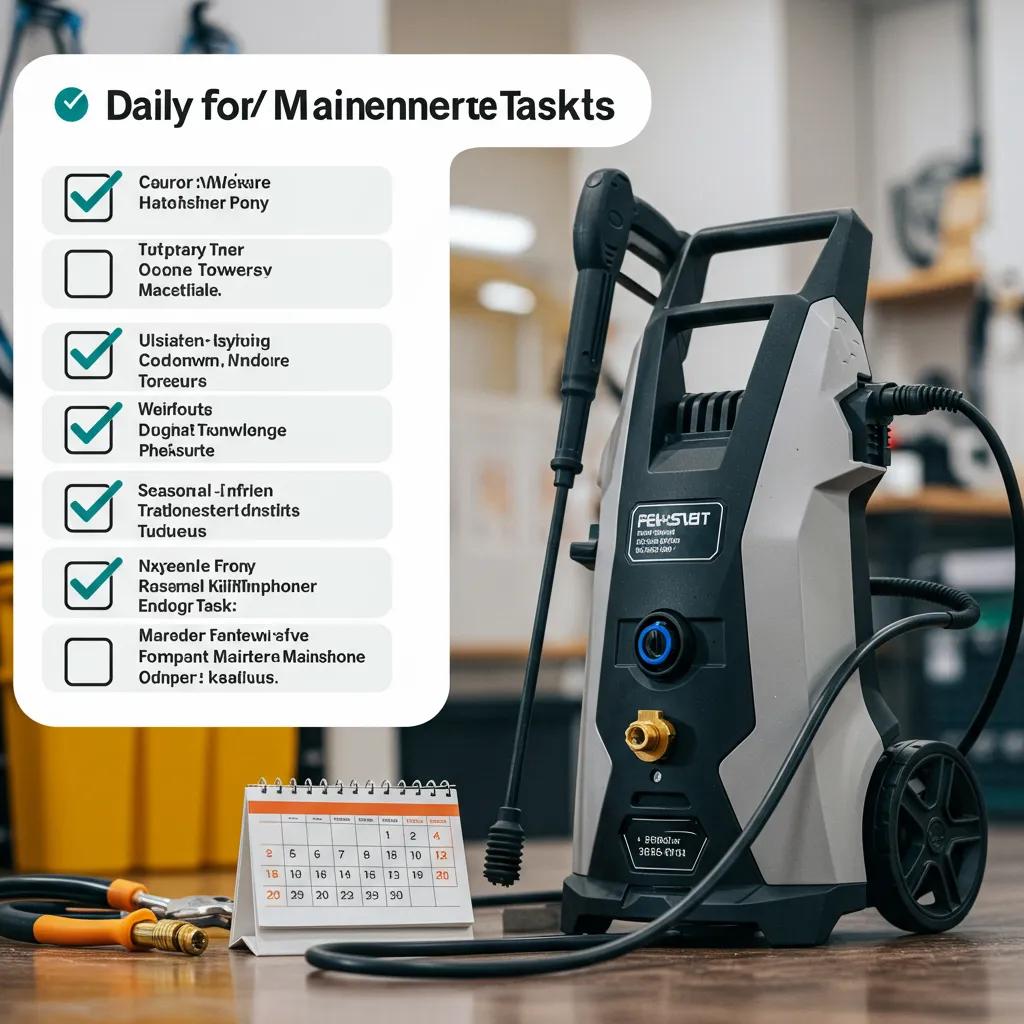
How Do You Perform a Daily Pressure Washer Maintenance Checklist?
Follow this brief after-use routine to prevent corrosion, detergent buildup, and seal damage; perform these steps every time you finish cleaning. First, run clean water through the system to flush detergent lines until water runs clear, which prevents chemical residue from degrading seals. Second, depress the trigger to relieve pressure, then disconnect and drain hoses, quick-connects, and nozzle tips to avoid trapped moisture. Finally, perform a visual inspection for leaks, kinks, or loose fittings and store the unit in a dry, shaded place to reduce UV and humidity exposure.
Performing these steps consistently prevents many common problems and makes seasonal maintenance faster and less costly.
What Seasonal Maintenance Steps Help Extend Pressure Washer Life?
Seasonal tasks vary by climate, but quarterly checks and annual service provide structure for long-term care in humid regions like Sarasota. Each season, change engine oil and inspect the spark plug, clean or replace air and inlet filters, and perform a pump flush followed by a pump saver treatment before storage or long idle periods. In high-humidity months perform more frequent visual inspections for corrosion and treat exterior metal and fittings with corrosion inhibitors as needed. Keep a simple seasonal log to track oil change dates, filter swaps, and any repairs so you can follow a predictable maintenance cadence.
This seasonal approach bridges daily care to component-focused actions—next we examine how to maintain the engine, pump, hoses, nozzles, and filters in detail.
How Should You Maintain Key Pressure Washer Components for Optimal Performance?
Component-level maintenance targets the engine, pump, hoses/nozzles/gun, and filters with specific actions and intervals so each meronym of the pressure washer functions reliably. Proper engine care preserves ignition and lubrication systems, pump maintenance prevents cavitation and seal failure, hose and nozzle care ensure consistent spray patterns, and filter attention keeps contaminants out of critical systems. The table below summarizes components, recommended maintenance tasks, and frequency so you can quickly compare priorities and act on the highest-impact items.
This EAV table gives a compact, actionable reference you can print or save with your equipment.
|
Component
|
Maintenance Task
|
Recommended Frequency/Notes
|
|---|---|---|
|
Engine
|
Change oil; inspect spark plug and air filter
|
Every 50 hours or seasonally; check spark plug annually
|
|
Pump
|
Flush with clean water; use pump saver fluid for storage
|
After each use flush; pump saver for winter/long idle
|
|
Hoses & Nozzles
|
Inspect for wear; clean nozzle tips; replace damaged quick-connects
|
Inspect weekly during use season; replace worn parts immediately
|
|
Filters (fuel/water/inlet)
|
Clean or replace inlet screen, air filter, fuel filter
|
Inspect monthly; replace when clogged or per manufacturer
|
What Are Best Practices for Engine Maintenance and Oil Changes?
Engine maintenance begins with using the correct oil viscosity and following a regular oil change schedule, which protects bearings and reduces heat-related wear. Check oil level before each use and perform a full oil change every 50 operating hours or at least once per season; replace the spark plug if fouled and clean or replace the air filter as needed to maintain combustion efficiency. Use fuel stabilizer if you expect the unit to sit idle for more than a month to prevent varnish and gumming in the carburetor, and always drain fuel before long-term storage to reduce ethanol-related corrosion. These steps preserve engine compression and starting reliability, which directly supports consistent cleaning performance.
To make these choices clearer, the table below compares common fluids and parts with recommended actions and intervals.
|
Fluid / Part
|
Attribute (type, viscosity, spec)
|
Recommended Action / Interval
|
|---|---|---|
|
Engine oil
|
SAE 10W-30 (small engines)
|
Change every 50 hours or seasonally; check level before each use
|
|
Spark plug
|
Standard plug, gap per manufacturer
|
Inspect every season; replace if worn or fouled
|
|
Fuel stabilizer
|
Additive for ethanol fuels
|
Add when storing fuel >30 days; run through carburetor briefly
|
|
Air filter
|
Foam or paper element
|
Clean foam monthly; replace paper element seasonally or as needed
|
How Do You Properly Care for the Pressure Washer Pump and Prevent Damage?
Pump care centers on preventing cavitation, maintaining seals, and avoiding abrasive contamination; flushing and pump-saver treatments are core defenses. After each use, flush the pump with clean water and engage a short run with a dedicated pump-flushing adapter or by running water through the system to remove detergent and particulates; before storage use a pump saver fluid to coat seals and inhibit corrosion. Avoid running the pump dry, and use inlet strainers to keep debris out of the pump; if you notice whining noises, reduced flow, or intermittent pressure, these are early signs of cavitation or internal wear and should be addressed immediately. For suspected internal pump damage or seal failure, professional service is recommended to avoid further harm.
These preventive practices reduce the likelihood of a costly rebuild and lead naturally into maintaining hoses, nozzles, and spray guns.
How Should You Maintain Hoses, Nozzles, and Spray Guns?
Hoses, nozzle tips, and spray guns are consumables that need frequent inspection and simple cleaning to preserve spray quality and safety. Check hoses for abrasions, bulges, and cracks before each use and replace any with visible damage; clean nozzle tips with a soft wire or nozzle-cleaning tool and inspect quick-connect fittings for worn O-rings. Store hoses coiled and protected from direct sun to minimize UV degradation, and stock spare nozzle tips and seals so you can swap worn parts quickly during a job. Proper care of these meronyms ensures consistent pressure and reduces stress on the pump and engine.
Maintaining these external components reduces common service calls and prevents loss-of-pressure issues covered in the troubleshooting section.
When and How Should Filters Be Cleaned or Replaced?
Filters—air, fuel, and inlet screens—protect the engine and pump by stopping particulates and water from entering critical systems; regular inspection prevents performance loss. Inspect inlet screens and pre-filters before each use and clean them when debris accumulates; change air filters seasonally or more frequently in dusty conditions, and replace fuel filters per equipment recommendations or when engine performance degrades. If you notice sputtering, loss of power, or unusual exhaust, a clogged filter is a likely cause and should be cleaned or swapped immediately to prevent longer-term damage. Establishing a simple filter-check routine ensures contaminants don’t cause cascading failures.
Addressing filters promptly keeps systems clean and feeds directly into troubleshooting common symptoms like pressure loss and starting problems.
What Are Common Pressure Washer Problems and How Can You Troubleshoot Them?
Common issues—loss of pressure, leaks, and starting or running problems—have systematic diagnostic paths that help homeowners isolate causes and apply safe DIY fixes before escalating to professionals. Troubleshooting follows symptom → likely cause → DIY fix → when to call a pro to ensure safe escalation and protect warranties. The approach reduces unnecessary parts replacement and clarifies when more advanced mechanical work is required, especially for pump and engine internals.
Start with basic checks like nozzle condition and inlet strainers, then move to pump and engine diagnostics if simple fixes don’t restore performance.
How Do You Fix Loss of Pressure and Low Spray Power?
Loss of pressure commonly stems from a blocked nozzle, kinked hose, clogged inlet filter, or unloader valve issues; systematically check these items in order of ease. First, inspect and clean the nozzle tip and inlet screen, then verify hoses and connectors are free of kinks or internal collapse; if the unloader valve is bypassing pressure, it may need adjustment or professional attention. If pump cavitation or internal wear is suspected—evidenced by a whining or sputtering pump—stop use and consult a technician to avoid seal and valve damage. Quick DIY checks often restore pressure, but persistent or unexplained pressure loss should trigger professional service.
Use the table below to support rapid diagnosis and decision-making when pressure drops.
|
Symptom
|
Possible Cause(s)
|
DIY Fix
|
When to Call a Pro
|
|---|---|---|---|
|
Low or no pressure
|
Blocked nozzle, inlet filter, kinked hose
|
Clean nozzle, clear hose, replace filter
|
If pump cavitation or unloader valve failure suspected
|
|
Intermittent pressure
|
Air in system, worn pump seals
|
Bleed air, tighten fittings, inspect seals
|
If pressure fluctuates after basic fixes
|
|
Rapid pressure loss under load
|
Pump slippage or internal valve wear
|
Check unloader adjustment, inspect pump
|
For internal pump repair or seal replacement
|
What Are the Signs of Leaks and How Can They Be Resolved?
Leaks can originate at hose fittings, quick-connects, pump seals, or engine gaskets; locating the source is the first step to repair. Begin by tightening fittings, replacing damaged O-rings, and swapping cracked hose sections; use dye or visual inspection to trace persistent leaks back to pump seals or engine areas. Temporary fixes—such as replacing a hose or fitting—are inexpensive and often effective, but a leaking pump seal or engine leak requires professional service to restore reliability and avoid collateral damage. Safety is paramount: stop using the unit if a high-pressure fluid leak is present and seek professional attention if you cannot isolate and fix the source quickly.
Identifying leak sources clearly sets the stage for decisions about DIY parts replacement versus certified repair work.
How Do You Troubleshoot Engine Starting and Running Issues?
Engine problems are commonly caused by stale fuel, fouled spark plugs, clogged air filters, or carburetor issues; a stepwise check isolates the simplest causes first. Verify fresh fuel and a working kill switch, inspect and clean or replace the spark plug, and clean the air filter; if problems persist, check the carburetor for varnish deposits and clean or rebuild as needed. For persistent compression or ignition issues, professional diagnostics are recommended to avoid unnecessary parts replacement and to protect engine integrity. A structured checklist speeds repair and prevents escalation from a start-up hiccup to a full engine overhaul.
Resolving these starting and running issues prepares homeowners to decide when professional help is the safer and more cost-effective option.
Safe and Effective High-Pressure Washer Use for Maintenance
While hot, high-pressure washers clean effectively, they can also damage parts on Army vehicles. The objective of this study was to develop preliminary guidance for selecting vehicle maintenance cleaningequipment and its operational settings. Development of these guidelines was to take into account maximum cleaning effectiveness minimum risk of damage to vehicle components and minimum safety hazard to personnel. To achieve this objective, the U.S. Army Construction Engineering Research Laboratory CERL conducted a literature search and contacted cleaningequipment industries for current information. A theoretical analysis of operating variables was then conducted to identify those most likely to influence damage to components of Army vehicles. Next, vehicle parts were physically tested. These tests were divided into a lab phase, which addressed the damage issue, and a field phase, which concerned cleaning effectiveness and safety. Finally, the data from the background studies and the two phases of physical testing were combined to make final recommendations about selecting and operating maintenance cleaningequipment. From the results of the lab phase of this study, it can be concluded that there are no absolutely safe operational settings below which damage cannot occur and above which it will always occur. From the results of the field phase of this study, it can be concluded that the washers pressure and temperature–above minimums of 500 psi 3445 kPa and 110 F 43 C–have little effect on the time required to clean any particular vehicle.
Preliminary Guidelines for Safe and Effective Use of Hot, High-Pressure Washers for Maintenance Cleaning of Army Vehicles., 1982
When Should You Call Professionals for Pressure Washer Maintenance or Repairs?
Some scenarios clearly require certified technicians: internal pump rebuilds, engine overhauls, persistent cavitation, or delicate surface cleaning where soft washing is required to prevent damage. Professionals offer specialized tools, insured service, and techniques that reduce risk—especially in cases involving roof cleaning or large commercial equipment where safety and surface integrity matter. For Sarasota homeowners, enlisting trained technicians helps address mold, algae, and moss on roofs and siding without damaging materials, and it ensures warranty-sensitive repairs are correctly performed.
Below is a simple scenario checklist that clarifies when DIY is appropriate and when to hire professionals.
-
Complex pump or engine failures that require disassembly and seal replacement.
-
Delicate or warranty-sensitive surfaces (roofs, certain siding) that need soft washing.
-
Large-scale jobs or commercial equipment requiring certified service and insurance.
-
Persistent problems after standard DIY troubleshooting steps have been completed.
These scenarios identify the highest-risk situations and point homeowners toward professional help when the stakes or complexity exceed DIY capabilities.
What Are the Benefits of Professional Pressure Washing Services in Sarasota?
Professional services combine local climate knowledge, specialized equipment, and eco-friendly solutions to deliver reliable results while protecting property and equipment. Trained technicians understand how humidity and salt air affect surface biology and metal corrosion, so they tailor cleaning methods and maintenance to those realities, improving results and reducing repeat work. Professionals also offer safety measures and insurance coverage for higher-risk jobs, which reduces homeowner liability during complex or elevated work. Local service providers with soft-wash expertise can clean roofs and delicate materials effectively while minimizing equipment stress and surface damage.
Understanding these benefits clarifies why homeowners might choose a professional for certain repairs or cleaning tasks rather than attempting risky DIY solutions.
How Does Gorilla Kleen’s Soft Washing Technique Protect Your Property and Equipment?
Gorilla Kleen applies soft washing to gently remove biological growth using low-pressure application and eco-friendly cleaning solutions, which preserves roofing materials and reduces aggressive pressure that can harm shingles or paint. Soft washing targets mold, algae, and mildew with targeted biocidal treatments, reducing the need for repeat high-pressure scrubbing that stresses both surfaces and equipment. This technique also reduces overspray and runoff risks through controlled application, protecting landscaping and reducing post-cleanup maintenance. For homeowners facing roof or delicate-surface cleaning, soft washing offers a safer alternative that extends surface life and reduces strain on cleaning equipment.
Knowing when to choose soft washing helps homeowners protect both property and the pressure washer itself from unnecessary wear.
Which Maintenance Tasks Are Best Left to Certified Technicians?
Tasks requiring disassembly, specialized tools, or warranty-sensitive procedures should be handled by certified technicians: pump rebuilds, internal seal replacements, engine overhauls, carburetor rebuilds, and complex diagnostics fall into this category. Certified technicians can also apply professional-grade pump and engine repairs, recalibrate unloader valves safely, and perform leak testing that may void warranties if done incorrectly. For large commercial units, warranty-impact services, or jobs that require insurance and trained crews, professional intervention protects both homeowner assets and equipment longevity. Always verify technician credentials and ensure eco-friendly methods are used when biological remediation is performed.
When in doubt about the scope or risk of a repair, professional assessment prevents costly mistakes and preserves equipment life.
How Does Sarasota’s Climate Impact Pressure Washer Maintenance Needs?
Sarasota’s humid, coastal climate accelerates corrosion, promotes biological growth on exterior surfaces, and increases the risk of fuel degradation and condensation in equipment, which raises the cadence for inspections and cleaning. Salt-laden air and persistent humidity can corrode fittings and housings, so more frequent lubrication, anti-corrosion treatments, and visual inspections are necessary compared with drier climates. Additionally, mold and algae thrive in these conditions, meaning more frequent exterior cleanings and pump stress when owners tackle heavily soiled surfaces; proactive maintenance reduces this load and prevents premature component wear.
These climate-driven considerations change the maintenance calendar and influence product choices and storage practices for local homeowners.
Why Does Humidity Increase Pressure Washer Wear and Mold Growth Risks?
High humidity encourages condensation inside fuel tanks and on metal parts, which contributes to rust and degradation of seals and bearings; moisture also supports rapid mold and algae cycles that increase cleaning intensity. Condensation can lead to fuel contamination and carburetor varnish, particularly when combined with ethanol-blended fuels, so fuel stabilizers and dry storage are more important in humid areas. The result is a higher frequency of corrosion-related maintenance tasks and more regular pump and filter attention to keep bio-contaminants out of the system. Recognizing this cause-effect relationship helps homeowners prioritize corrosion prevention and biological control.
Addressing humidity-driven wear informs both storage choices and cleaning schedules to protect equipment longevity.
How Can Proper Maintenance Combat Florida’s Mold, Algae, and Moss Challenges?
Regular cleaning of exterior surfaces reduces the load of spores that stress a pressure washer when deep-cleaning is required, and preventive soft washing using eco-friendly agents slows regrowth and reduces the need for aggressive pressure. For equipment, flushing detergent lines, using pump saver fluids, and replacing inlet filters frequently prevents biological material and moisture from damaging seals and valves. Combining preventive surface maintenance with appropriate equipment care reduces both cleaning intensity and repair frequency, preserving machine life in humid climates. When biological growth is extensive or on delicate surfaces, professional soft-wash treatments offer an effective complement to homeowner maintenance.
These combined actions—surface management plus equipment care—deliver the most durable defense against Florida’s biological and corrosion pressures.
A structured maintenance routine, attention to component care, and clear escalation paths for professional service together keep pressure washers operating efficiently in Sarasota and similar climates. For homeowners who prefer a professional assessment, Gorilla Kleen provides local soft-wash expertise, eco-friendly cleaning options, and professional maintenance services—contact Gorilla Kleen by name or phone for a consultation if a problem goes beyond routine DIY care.

studied Business Administration at Vanderbilt University and received his BA there.
- How to Clean Stucco the Right Way: What Florida Homeowners Should Know Before Pressure Washing - March 12, 2026
- Preparing Your Home for Florida’s Rainy Season: Exterior Cleaning That Prevents Mold and Algae - March 12, 2026
- What Actually Causes Black Roof Streaks in Sarasota — And How to Stop Them From Coming Back - February 9, 2026